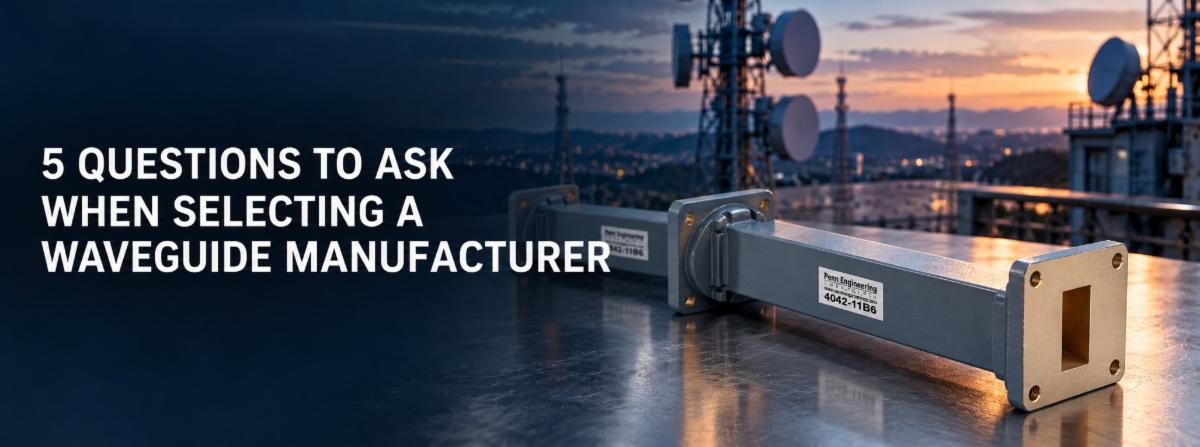
Moving Waveguide Components from Prototype to Production in Commercial Communications
Commercial communications infrastructure programs often require waveguide components to perform consistently across multiple system builds, sites, or production releases. A successful prototype is an important first step, but it does not automatically ensure repeatable production results.
As quantities increase, variations in dimensions, flange interfaces, materials, surface treatments, or manufacturing processes can affect fit, RF performance, deployment schedules, and overall system consistency.
Before moving a waveguide design from prototype to production, consider these five questions when evaluating a precision waveguide manufacturer.
1. Can the supplier consistently meet your specifications at production quantities?
Producing a small number of acceptable components is different from maintaining consistent results throughout a production run. Ask how the manufacturer controls critical dimensions and manufacturing processes as quantities increase.
The conversation should cover more than machining capability. Tooling strategy, equipment capacity, inspection resources, lead times, and management of outside processes may all influence production consistency and program schedules.
2. How are critical dimensions and RF characteristics verified?
A supplier should be able to explain how the characteristics that matter to your application will be inspected or tested.
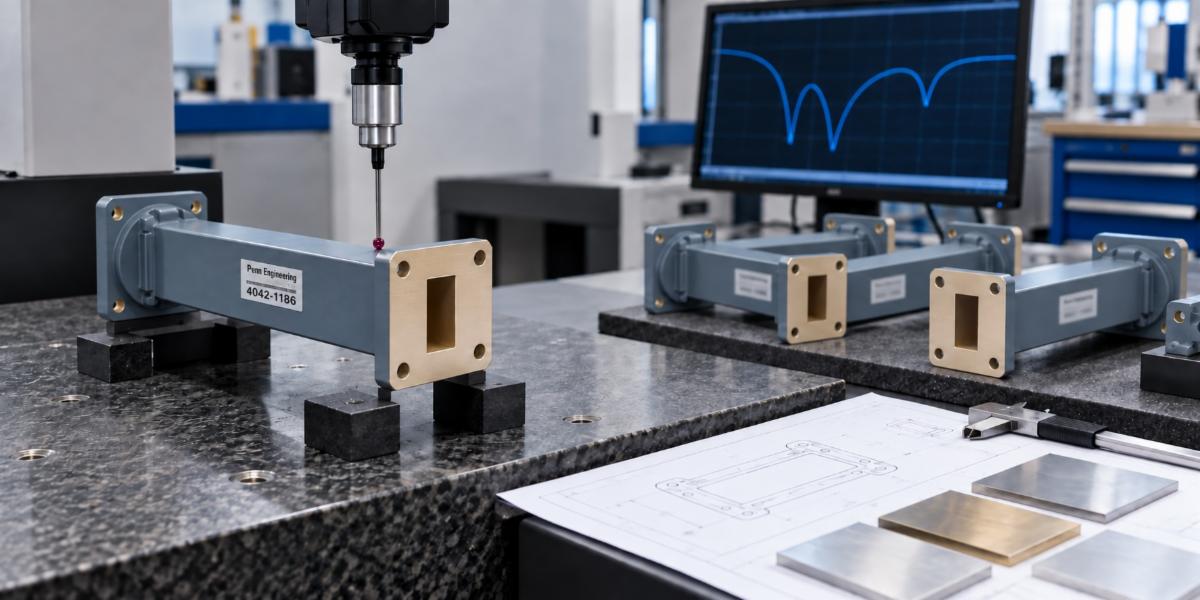
Depending on the component and program requirements, dimensional inspection may include the waveguide aperture, physical length, flange flatness, and alignment-hole or pin locations. Electrical acceptance criteria may include insertion loss, return loss, or VSWR across the specified frequency band.
The drawing, purchase order, or quality plan should clearly identify which characteristics require verification, the applicable sampling or testing requirements, and the documentation to be delivered.
3. What traceability and quality documentation are available?
Documentation requirements should be established before production begins—not addressed after components arrive. Depending on the application and customer requirements, the documentation package may include:
- First Article Inspection reports
- Material certifications
- Dimensional inspection records
- Electrical test results
- Lot or component traceability
- Special-process certifications
- Drawing-revision and configuration records
Clarifying these requirements early helps ensure that both the manufacturer and customer are working from the same acceptance criteria.
4. Are the materials, finishes, and special processes appropriate for the application?
Material and surface-treatment decisions can influence conductivity, corrosion resistance, environmental durability, and manufacturability.
Provide the supplier with the expected operating environment and applicable specifications instead of selecting a finish by name alone. Requirements may include conductive plating, chemical conversion coatings, paint, brazing, or other controlled processes.
The manufacturer should be able to confirm that the proposed materials and processes are compatible with the component’s RF, mechanical, and environmental requirements.
5. How is the transition from prototype to production controlled?
The prototype-to-production handoff should preserve the requirements and lessons established during development. Ask how the supplier manages:
- First-article approval
- Drawing and configuration changes
- Tooling or process changes
- Nonconformances and corrective actions
- Customer notification requirements
- Production capacity and delivery schedules
A clearly defined handoff can help reduce avoidable variation, qualification delays, and unexpected changes after production begins.
Supporting Commercial Communications Programs from Prototype Through Production
Penn Engineering Components supports prototype and production requirements for standard and custom waveguide components manufactured to customer drawings and specifications.
Our published capabilities include CNC machining, automated coordinate measuring machine inspection, vector network analyzer testing, dip brazing, and application-specific surface treatments.
Penn is ISO 9001:2015 certified and maintains traceability of materials, hardware, and components throughout its manufacturing processes.
Inspection records, material certifications, First Article Inspection requirements, electrical testing, and other deliverables can be defined as part of the drawing, purchase order, or agreed quality plan. Establishing these requirements early helps align manufacturing and acceptance criteria before production begins.
Planning a Commercial Communications Waveguide Program?
Whether you are developing a new communications system or preparing an established design for production, complete project requirements give the manufacturer a stronger basis for evaluating manufacturability, inspection needs, capacity, and scheduling.
When requesting a quote, provide as much of the following information as possible:
- Frequency band
- Drawings and critical dimensions
- Material and surface-finish requirements
- Flange and interface specifications
- Electrical acceptance criteria
- Expected operating environment
- Anticipated quantities and delivery schedule
- Inspection, testing, and documentation requirements
Connect With Our Sales Team
To discuss your defense systems and waveguide requirements