
A Practical Guide to Specifying Waveguide Tubing
Choosing waveguide tubing starts with a few practical questions: What frequency will the system use? Where does the tubing need to fit? And how will it connect to the rest of the assembly?
Those answers help narrow the size, material, wall thickness, and length. Getting them together early can also make a quote request easier to review.
Here is a straightforward guide to the main decisions.
Start with the operating frequency
Waveguide tubing carries microwave energy through a hollow metal section. Its internal dimensions help determine the frequencies it can carry, so size selection begins with the system’s operating frequency.
Rectangular waveguide sizes commonly use a WR designation, such as WR90 or WR430. Each designation corresponds to a particular internal cross section.
If you are replacing an existing section, the drawing or part specification is usually the best starting point. If you are developing a new assembly, provide the required frequency range so the supplier can help confirm an appropriate size.
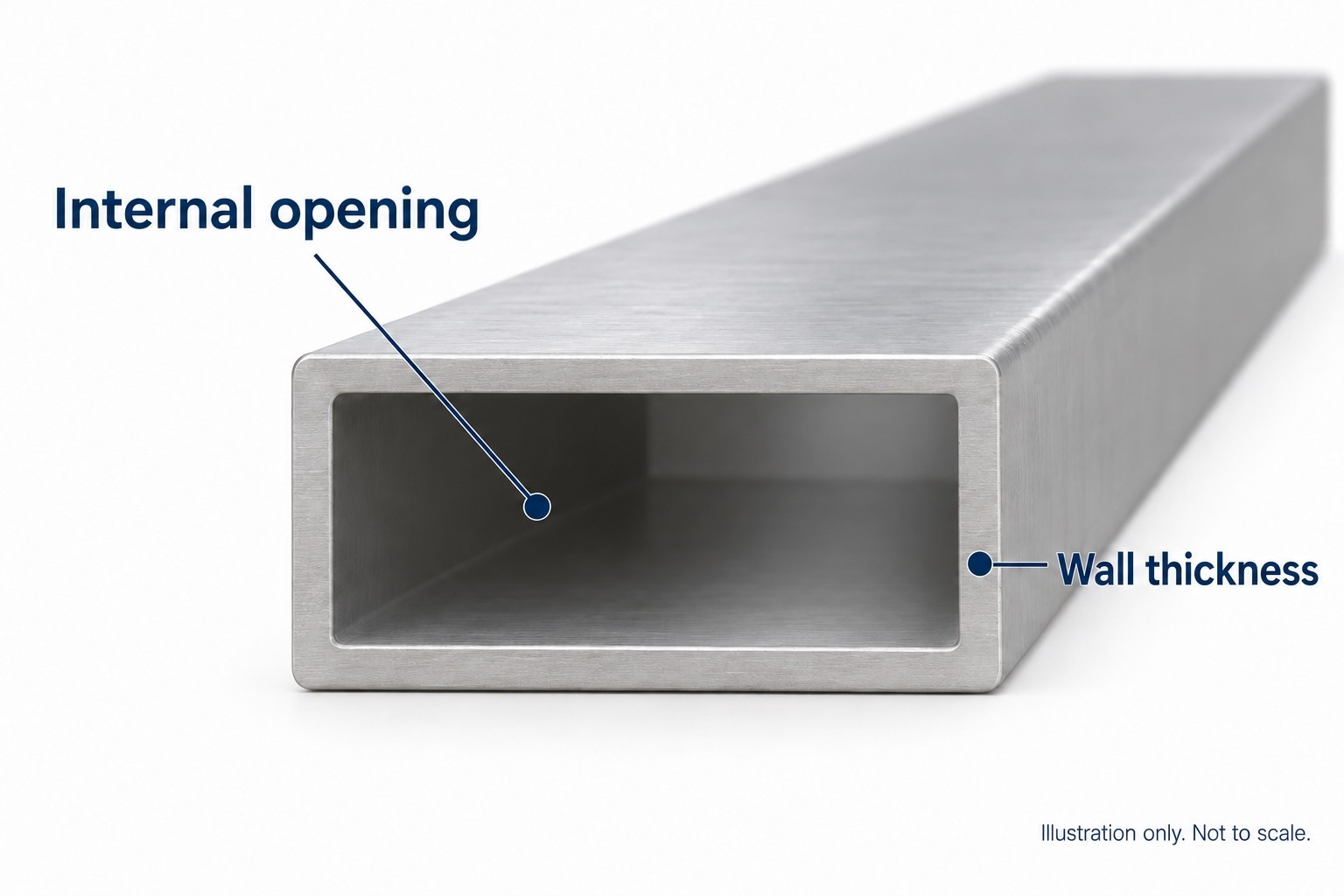
Outside dimensions alone are not enough to identify tubing. The internal opening and wall thickness both matter.
Choose the material for the application
Copper and aluminum are two materials to consider, but the right choice depends on more than electrical performance.
Copper may be appropriate where conductivity and the assembly’s fabrication requirements are priorities. Its weight and the way it will be joined to other parts also need consideration.
Aluminum may be useful where weight matters. The alloy, joining method, finish, and operating environment should be reviewed together.
Other materials may suit specific applications. Rather than choosing from a general comparison alone, start with the drawing requirements and the conditions the finished assembly will face.
For a replacement part, avoid changing the material without checking whether that change affects the assembly.
Treat wall thickness as a separate decision
Two pieces of tubing can have the same internal opening and different wall thicknesses.
Wall thickness affects the outside dimensions, weight, and mechanical strength. It can also influence how the tubing is supported, machined, bent, or joined during fabrication.
A heavier wall may be appropriate for some manufacturing or structural requirements. A thinner wall may help reduce weight. Neither is automatically the better option.
If the drawing specifies a wall thickness or tolerance, include it in the request. If it does not, explain how the tubing will be used so the supplier can identify what needs clarification.
Confirm the length and how it will be measured
A tubing request should distinguish between raw stock and a finished section ready to connect.
For raw tubing, provide the quantity and required cut length. Note whether you need extra material for machining or finishing.
For a finished section, also identify the flange arrangement and the reference points used to measure length. A cut length and a finished flange-to-flange dimension are different requirements.
If a section will be bent, twisted, or incorporated into a larger assembly, a drawing is more useful than a length alone.
A clear specification makes the next step easier

The best tubing choice is one that meets the system’s electrical requirements and fits the way the assembly will be built and used.
Penn Engineering’s waveguide tubing information provides a starting point for reviewing sizes and material options. For a quote, share your drawing or the requirements you have available, and identify any details you would like help confirming.
Connect With Our Sales Team
To discuss your defense systems and waveguide requirements